
 Mealworm Life Cycle
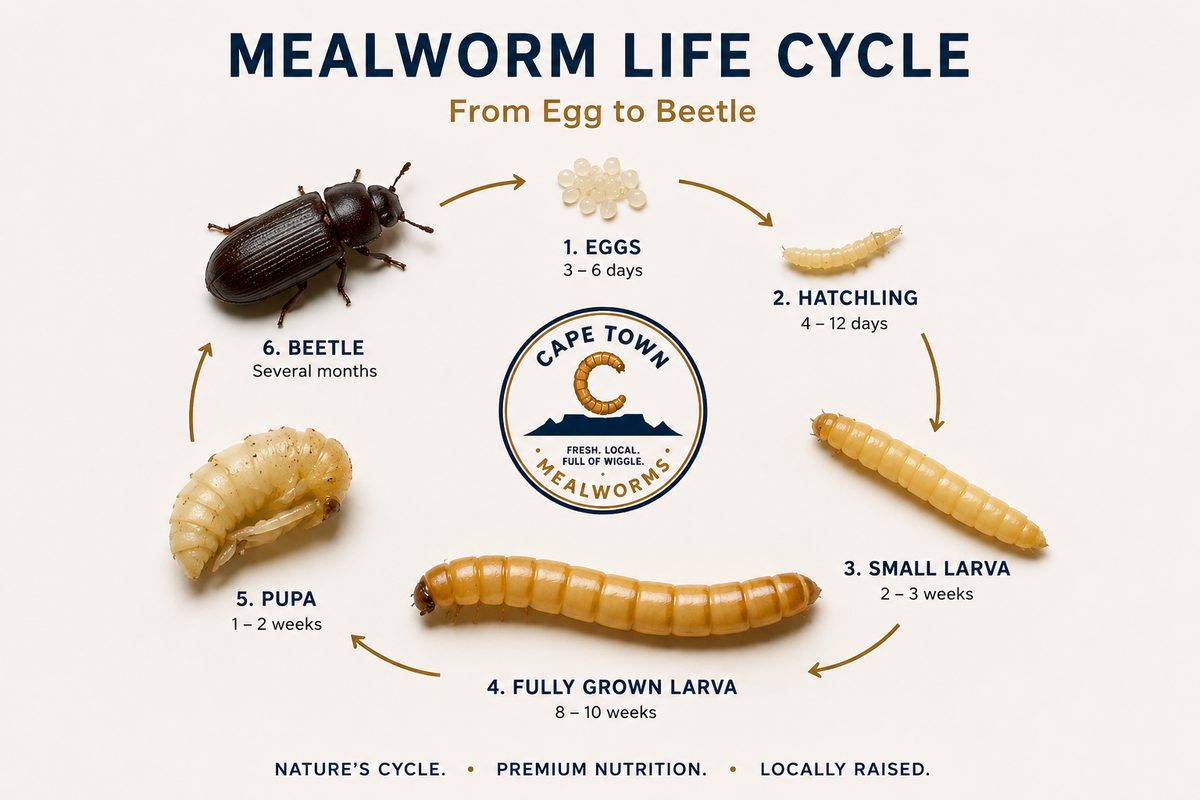
Mealworms are the larval stage of the Darkling Beetle (Tenebrio molitor). Their life cycle is a fascinating transformation through four distinct stages: egg, larva, pupa, and adult beetle. Most of the insect’s growth takes place during the larval stage, where mealworms spend their time eating, growing, and storing energy for metamorphosis.
Egg Stage
Female beetles lay clusters of tiny, white eggs in the substrate. These eggs are almost invisible to the naked eye. After 1–4 weeks, depending on temperature and humidity, the eggs hatch into larvae.
Larval Stage (Mealworm)
This is the longest and most active stage. Newly hatched larvae are only a few millimetres long, pale and translucent. At this stage, their soft bodies have not yet hardened, making them appear delicate. Within a short time, the outer skin hardens and their colour begins to change.
From Cream to Golden Brown
As the mealworm grows, it gradually develops a creamy yellow appearance before becoming the familiar golden honeybrown colour associated with healthy, mature larvae. This natural colour change is the result of the exoskeleton hardening through a process called sclerotisation. A rich goldenbrown colour is a good indication that the mealworm is healthy and actively feeding.
Stepwise Growth and Moulting
Unlike mammals, mealworms do not grow smoothly. Their rigid exoskeleton limits continuous expansion, creating a unique stepwise growth pattern.
During each growth phase, the larva continuously feeds and stores nutrients beneath its hardened outer shell.
Once the exoskeleton becomes too tight, the mealworm moults — shedding the old cuticle and revealing a new, soft body underneath.
At this stage, the larva rapidly expands by increasing internal body pressure through air intake and fluid redistribution.
The new exoskeleton stretches like a flexible container before gradually hardening again.
This repeating cycle of feeding, moulting, expansion, and hardening produces the characteristic “pulsed” or discontinuous growth seen in many insects.
Constant Feeding and Growth
Throughout the larval stage, mealworms spend most of their time eating. They convert food into body mass very efficiently, allowing them to grow rapidly while storing energy for the next stage of their life cycle. With proper nutrition and environmental conditions, a mealworm will eventually reach approximately 25–30 mm in length.
Pupal Stage
When fully grown, the mealworm stops feeding and becomes less active. It sheds its final larval skin and transforms into a pupa.
Pupae are creamcoloured, immobile, and resemble curled casings.
This stage lasts 1–3 weeks.
Inside, the insect reorganizes its body into the adult beetle form.
Adult Beetle Stage
The final stage is the Darkling Beetle. Newly emerged beetles are pale but darken to black within a few days.
Adults live for several months.
They mate and lay eggs, beginning the cycle again.
Key Takeaway
The mealworm’s journey — from tiny egg to larva, then pupa, and finally beetle — is a complete metamorphosis. The larval stage is the most dynamic part of this cycle, marked by rapid feeding, repeated moulting, and striking colour changes. For keepers, understanding each stage helps manage colonies effectively, ensuring healthy development and continuous breeding.
 Baby Mealworms
Newly hatched mealworms may be small, but with the right care they will quickly grow into healthy, active larvae. Providing a clean environment, quality food, and the correct amount of moisture is essential during these early stages of development.
What Do Newly Hatched Mealworms Look Like?
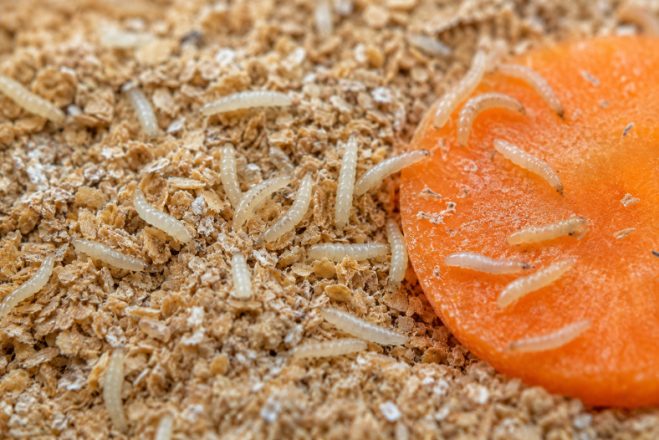
Baby mealworms hatch at only 2–3 mm long and are almost white and translucent. Their bodies are soft immediately after hatching but soon harden, changing to a creamy colour before gradually becoming the familiar golden brown as they grow.
Don’t be alarmed if you struggle to see them at first—they are incredibly small and blend into the bedding.
1. Leave Them Undisturbed
For the first few weeks, it is best to leave the hatchlings in their breeding tray.
Frequent handling or moving them can cause unnecessary stress and may result in accidental losses. Given time, they will naturally spread throughout the bedding and begin feeding.
Baby mealworms (just hatched to about 5 mm) do not need a separate water source. They get all the moisture they require from their food and the environment.
2. Provide a High-Quality Food Source
The bedding is also their food.
Use a clean, dry substrate such as:
- Wheat bran (Recommended)
- Oat bran
Ensure there is always enough food available, as baby mealworms feed continuously while growing.
3. Moisture Is Essential
Although mealworms do not drink water directly, they must have access to moisture.
The safest way to provide this is with fresh vegetables such as:
Carrot (highly recommended)PotatoSweet potato
Carrots are often the preferred choice because they stay fresh longer and are less likely to encourage mould.
Place a small piece of fresh carrot on the bedding and replace it every 24–48 hours, or sooner if it starts to dry out or deteriorate.
Never provide standing water, as tiny mealworms can drown and excess moisture can promote mould and harmful bacteria.
4. Maintain the Right Temperature
For optimum growth, keep baby mealworms between:
- 24°C and 28°C
Lower temperatures will slow development, while excessively high temperatures can stress the colony.
5. Keep the Environment Dry
While mealworms need moisture from vegetables, the bedding itself should remain dry.
Remove any uneaten vegetables before they spoil and avoid overwatering or introducing damp materials into the colony.
Good ventilation also helps prevent mould growth.
6. Watch for Natural Colour Changes
As baby mealworms grow, they will moult many times.
Immediately after each moult they will appear:
- Soft
- White
- Almost translucent
Within a few hours, their new exoskeleton hardens and they return to a creamy yellow before gradually developing the rich golden-brown colour of a healthy larva.
Seeing white mealworms among darker ones is completely normal and simply indicates that moulting is taking place.
7. Cleaning and Maintenance
Very young colonies require minimal disturbance.
Once the larvae have grown larger, regularly sift out:
- Frass (mealworm waste)
- Shed skins (exuviae)
- Any spoiled vegetables
Maintaining a clean environment supports healthy growth and reduces the risk of mould or pests.
Signs of Healthy Baby Mealworms
Healthy hatchlings should:
- Be active and wriggle when disturbed
- Feed readily on the bedding and fresh vegetables
- Moult regularly
- Grow steadily in size
- Change from translucent white to golden brown as they mature
A Strong Start for a Healthy Colony
With warmth, nutritious bedding, a reliable source of moisture, and a clean environment, newly hatched mealworms will thrive. Their rapid growth and repeated moulting are all part of a fascinating natural process that transforms tiny hatchlings into robust, protein-rich larvae ready for feeding or future breeding.
 Pupa
The pupal stage is one of the most remarkable phases in a mealworm’s life cycle. Although the pupa appears almost motionless from the outside, an incredible transformation is taking place within.
From Active Larva to Quiet Pupa
After spending weeks feeding and growing, a mature mealworm reaches the point where it has stored enough energy to undergo metamorphosis.
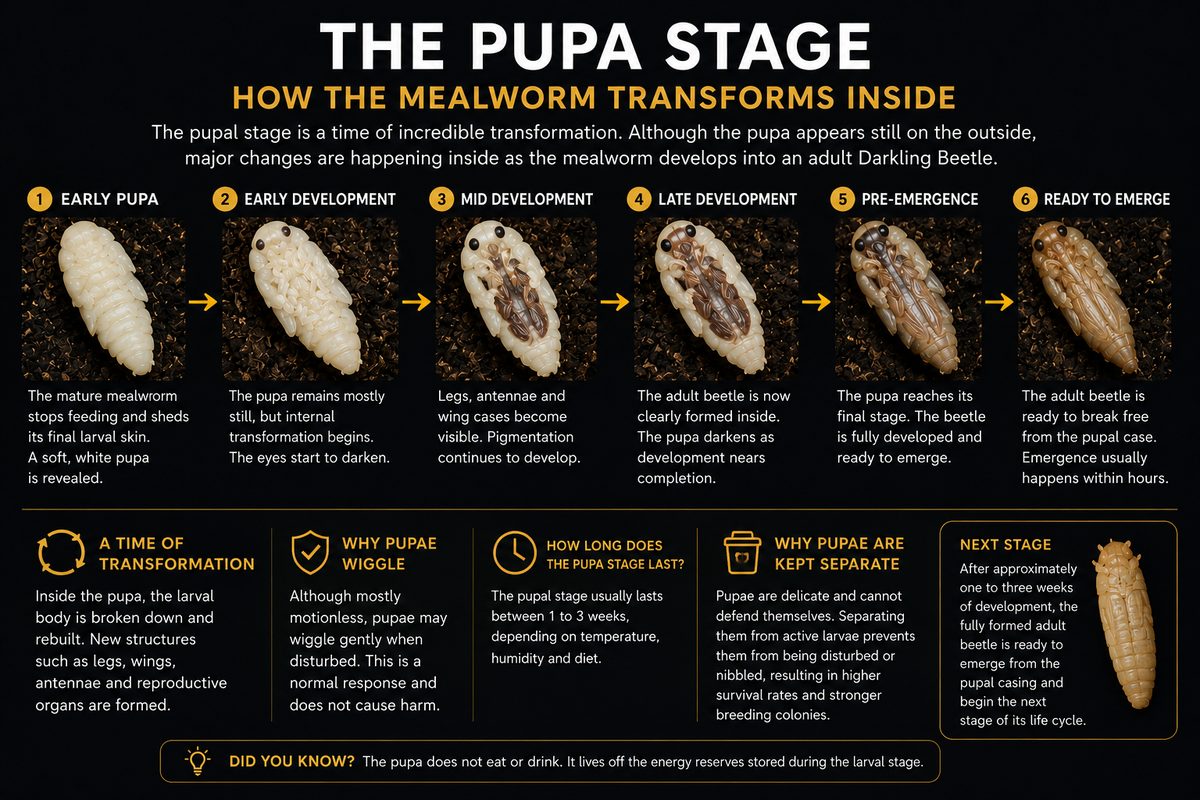
At this stage, the larva stops eating, becomes less active, and eventually sheds its final larval skin. In its place emerges a soft, creamy-white pupa.
Unlike the constantly moving mealworm, the pupa remains mostly still. However, it may wiggle gently if disturbed, which is a perfectly normal response.
A Time of Complete Transformation
Inside the pupa, the mealworm’s body is being completely reorganised.
The tissues and structures that made up the larva are broken down and rebuilt into those of an adult Darkling Beetle. Legs, antennae, wings, and reproductive organs all develop during this stage.
This complex process is known as complete metamorphosis and allows the insect to emerge in an entirely different form.
Colour Changes During Development
A newly formed pupa is almost pure white with a soft, delicate appearance.
As development progresses, subtle colour changes begin to appear. The eyes darken first, followed by the developing legs and wing covers. Over time, the entire pupa takes on darker shades as the adult beetle forms inside.
These gradual colour changes provide a useful indication of how close the beetle is to emerging.
The Emergence of the Beetle
When development is complete, the adult Darkling Beetle breaks free from the pupal casing.
Freshly emerged beetles are light cream or pale brown and have a soft exoskeleton. Over the next few days, this outer shell hardens and darkens until the beetle becomes the familiar shiny black colour.
Only once fully hardened is the beetle ready to mate and begin producing the next generation of mealworms.
Why Pupae Are Often Separated
In managed mealworm colonies, pupae are commonly moved into separate breeding containers.
Because they cannot defend themselves effectively, pupae may be disturbed or even nibbled by active larvae if left together. Separating them provides a safe environment where they can complete their transformation undisturbed.
This simple management practice improves survival rates and helps maintain a healthy, productive breeding colony.
Nature’s Hidden Miracle
Although it may appear to be a quiet resting stage, the pupa is actually one of the busiest periods in a mealworm’s life. Hidden beneath its still exterior, a complete biological makeover is taking place—transforming a feeding larva into the beetle that will continue the life cycle.
 Darkling Beetle
The Final Stage of the Mealworm Life Cycle
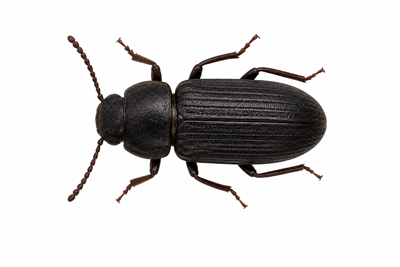
When the transformation is complete, the adult Darkling Beetle breaks free from the pupal casing. It emerges soft, pale cream in colour, and gradually darkens to glossy black as its exoskeleton hardens over the following days.
Although it may look fragile at first, this newly emerged beetle will soon become the breeding foundation of the next generation of mealworms.
A Newly Emerged Beetle
Freshly emerged Darkling Beetles are almost unrecognisable compared to their final appearance. Their bodies are soft, light cream to pale tan in colour, and their wings and legs have not yet fully hardened.
During this time, the beetle remains relatively inactive while its exoskeleton strengthens.
The Colour Change
Over the next few days, the beetle undergoes a remarkable colour transformation.
Day 1: Soft cream or ivory white.
Day 2: Light tan or caramel brown.
Day 3–4: Dark brown as the exoskeleton continues to harden.
Fully Mature: A shiny, jet-black Darkling Beetle.
This gradual darkening is a natural process called sclerotisation, during which the outer shell hardens and becomes more durable.
Ready to Breed
Once fully hardened, the beetle becomes active and begins searching for food and mates.
After mating, female beetles lay hundreds of tiny eggs throughout their lives, usually depositing them within the bedding substrate where they are protected from view.
These eggs will hatch into tiny mealworms, beginning the life cycle all over again.
Feeding and Care
Unlike the larval stage, adult beetles consume relatively small amounts of food. They thrive on a diet of grains and bran, supplemented with fresh vegetables for moisture.
Keeping breeding colonies clean and well maintained encourages healthy egg production and improves the overall productivity of the colony.
Lifespan
A healthy Darkling Beetle typically lives for two to three months, although this can vary depending on temperature, nutrition, and environmental conditions.
During this time, a single female may lay hundreds of eggs, making the beetle stage essential for maintaining a continuous mealworm colony.
Nature’s Breeding Specialist
While the mealworm larva is responsible for growth and storing energy, the Darkling Beetle has one primary role—to reproduce and ensure the survival of the species.
Its transformation from a pale, soft-bodied insect into a glossy black beetle is the final step in one of nature’s most fascinating life cycles and marks the beginning of a whole new generation of mealworms.
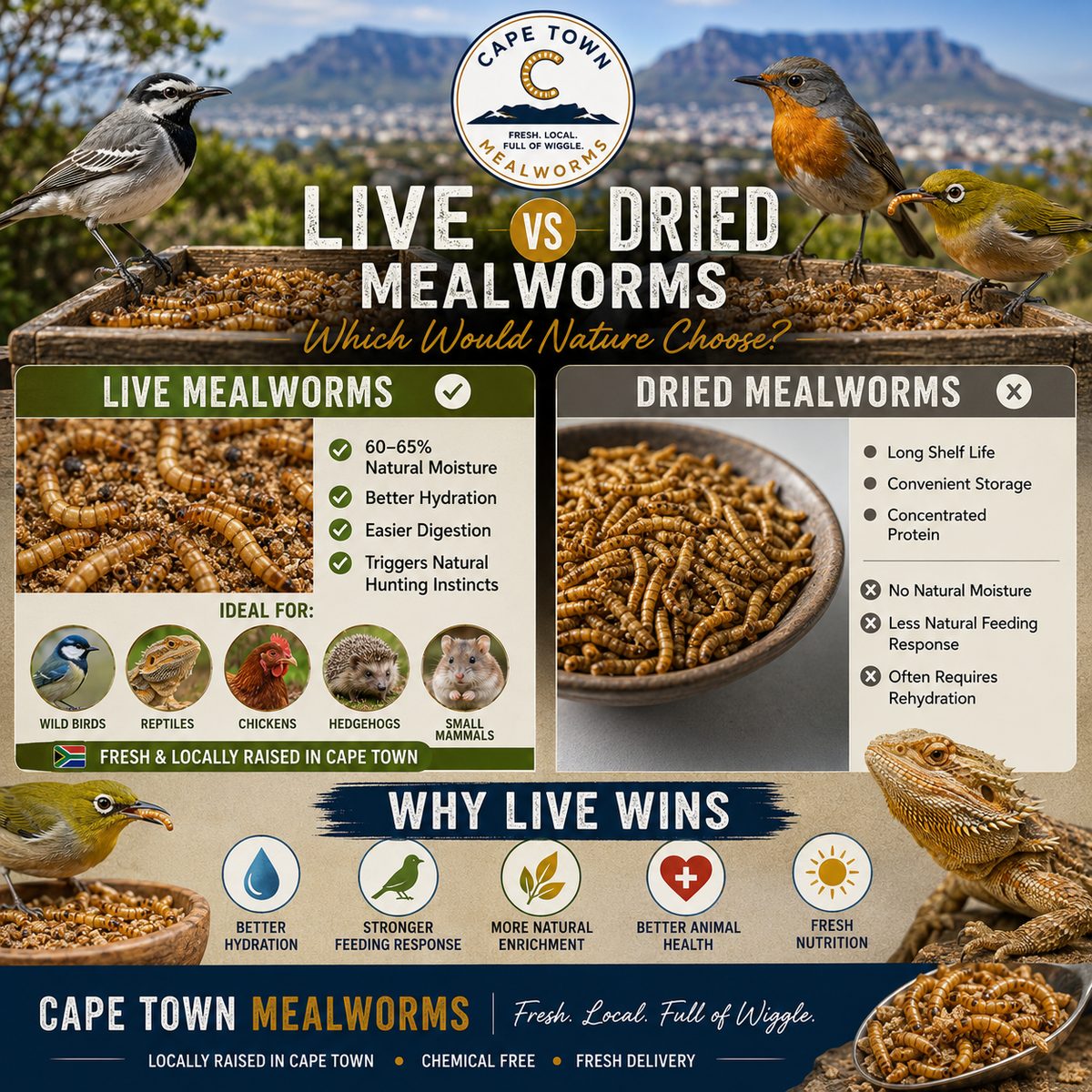 Live vs Dried
When choosing between live and dried mealworms, many pet owners, bird enthusiasts, and reptile keepers wonder which option offers the best nutrition and value. Both forms have their place — but depending on your goals, one may be a better fit than the other.
At Cape Town Mealworms, we specialise in fresh, locally raised live mealworms, so we’ve seen firsthand how animals respond to each type. Here’s a clear breakdown to help you make the right choice.
1. Nutritional Differences
Live Mealworms
Live mealworms contain:
- Higher moisture content (around 60–65%)
- Natural fats and proteins in their freshest form
- Intact enzymes that support digestion
- No preservatives or processing
This makes them ideal for:
- Birds during breeding or moulting
- Reptiles that rely on movement to trigger feeding
- Chickens needing extra protein for egg production
- Hedgehogs, hamsters, and small mammals that benefit from natural moisture
Dried Mealworms
Dried mealworms offer:
- Long shelf life
- Convenience
- A concentrated protein level (because water is removed)
However, they lack moisture and can be less appealing to some animals unless rehydrated.
2. Behavioural Benefits
Live Mealworms Encourage Natural Hunting
Animals instinctively respond to movement. Live mealworms:
- Stimulate natural foraging and hunting behaviour
- Keep birds active and engaged
- Encourage reptiles to feed more readily
- Reduce boredom in small mammals
This makes live mealworms especially valuable for:
- Wildlife rehabilitation
- Backyard bird feeding
- Enrichment for pets
Dried Mealworms Are Passive
Dried worms don’t move, so they:
- Don’t trigger natural feeding responses
- May be ignored by picky eaters
- Often need soaking to improve acceptance
3. Digestibility and Hydration
Live Mealworms
Because they contain natural moisture, live mealworms:
Are easier to digest
- Help prevent dehydration
- Support gut health
- Provide a more complete nutritional profile
This is particularly important for:
- Nesting birds
- Young chicks
- Reptiles in warm climates
- Animals recovering from illness
Dried Mealworms
Dried worms can be harder to digest and may cause:
- Constipation
- Dehydration if fed in large amounts
- Reduced nutrient absorption
- Soaking them helps, but they still don’t match the hydration benefits of live insects.
4. Freshness and Quality
Live Mealworms
At Cape Town Mealworms, our live mealworms are:
- Raised locally in Cape Town
- Fed only fresh vegetables
- Clean, healthy, and chemicalfree
- Responsibly bred with care
- You receive them fresh, active, and full of natural nutrition.
Dried Mealworms
Quality varies widely depending on:
- Processing methods
- Storage conditions
- Age of the product
- Imported dried mealworms may be months old before reaching shelves.
5. Convenience and Storage
Live Mealworms
- Require simple care
- Can be stored for weeks in bran
- Stay fresh with minimal maintenance
- Offer better value per gram of usable nutrition
Dried Mealworms
- Extremely convenient
- No maintenance
- Long shelf life
- Easy to store and transport
So Which Should You Choose?
Both live and dried mealworms have their place — but if your goal is maximum nutrition, natural behaviour, and animal health, live mealworms come out on top.
They provide:
- Better hydration
- Higher digestibility
- Stronger feeding response
- More natural enrichment
- Fresher, cleaner nutrition
For convenience or casual feeding, dried mealworms are perfectly suitable. But for breeders, wildlife
carers, reptile keepers, and anyone wanting the best for their animals, live mealworms are the superior choice.